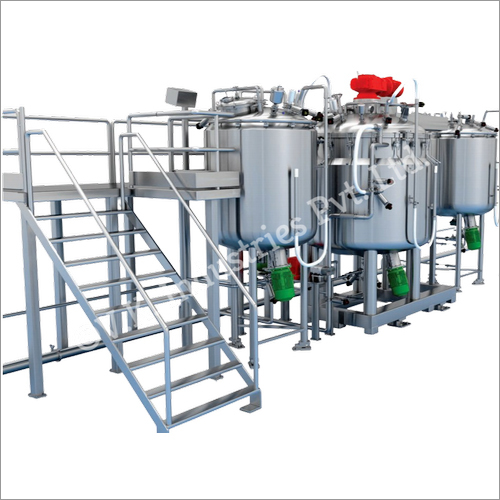
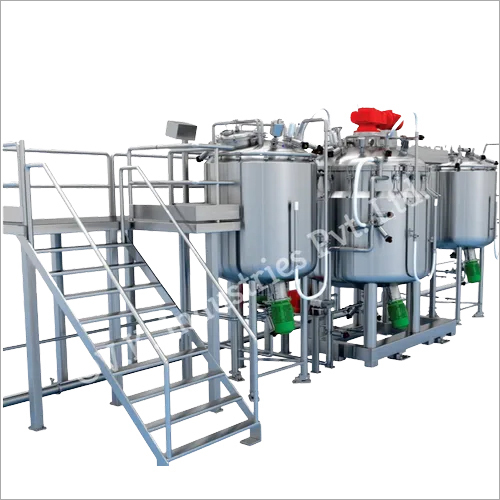
About Motor and Engine Oil Blending Plant
Product Details:
| Capacity |
500kg/hr to 15,000 kg/hr |
| Finishing |
Mirror Polishing, Matt Polishing, Acid Passivation |
| Material |
SS304 or SS316 |
| I Deal In |
New Only |
| Design Type |
Customized |
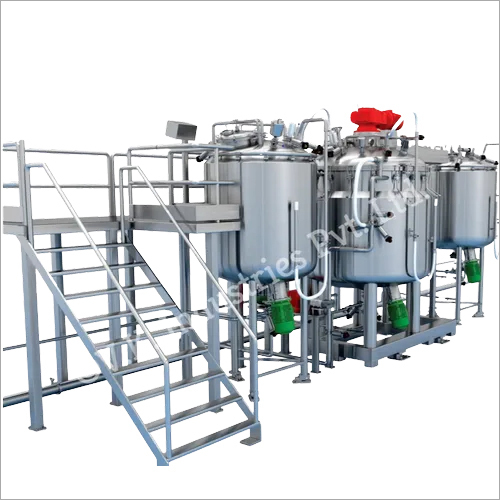
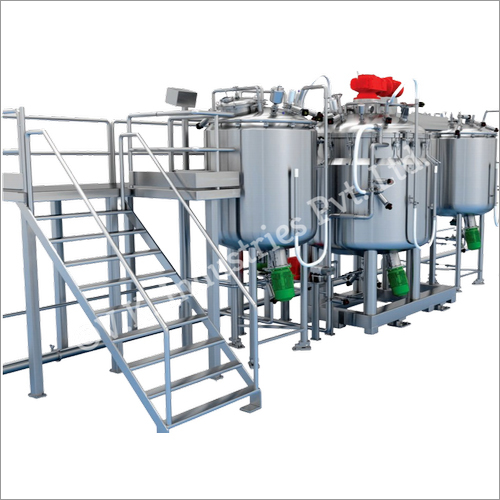
Efficient and Uniform Oil BlendingOur blending plant employs high shear agitators and precision batch controls to deliver consistent product quality, regardless of batch size. The computerized PLC system manages process parameters, while an advanced heating system ensures oils reach optimal blending temperatures quickly and efficiently. With flexible shaft and drive type selection, the plant meets diverse operational needs.
Robust Safety and Monitoring FeaturesSafety is central to the plant's design, with emergency shut-off systems, overheat protection, comprehensive alarms, and low-noise operation (under 80 dB). Level sensors ensure automatic monitoring, reducing manual intervention while enhancing reliability. Corrosion-resistant stainless steel construction further guarantees long service life and minimal maintenance requirements.
Versatile Operation and Easy MaintenanceChoose between batch or continuous operation modes to suit production requirements. The integrated CIP cleaning system streamlines maintenance, supporting hygiene standards and operational uptime. With capacities from 1 to 50 KL per batch, and compatibility with multiple packaging materials, the plant is ideal for both large exporters and smaller suppliers.
FAQ's of Motor and Engine Oil Blending Plant:
Q: How does the batch control system operate in this oil blending plant?
A: The blending plant can be equipped with either automatic or manual batch control systems. Automatic operation is managed via an integrated PLC control panel, allowing precise measurement and control of ingredients, ensuring consistent quality and reducing human error during mixing cycles.
Q: What safety features are included in the blending plant?
A: The system incorporates multiple safety features, such as emergency shut-off controls, overheat protection, and warning alarms. These safeguards minimize operational hazards and protect both personnel and equipment during production.
Q: When is it necessary to use SS316 tank material instead of SS304?
A: SS316 is recommended over SS304 when processing aggressive additives or harsh chemicals, as it offers superior corrosion resistance. For standard lubricant or engine oil blending, SS304 is typically sufficient, but the material choice depends on specific process requirements.
Q: Where can this blending plant be installed and what support is provided?
A: The plant can be installed at industrial sites worldwide, with a particular focus on India. Comprehensive service support includes on-site installation and operator training, ensuring smooth commissioning and operation from the outset.
Q: What is the cleaning process for the plant, and how does the CIP system work?
A: The Cleaning-in-Place (CIP) system allows for automated internal cleaning without disassembling equipment. Cleaning agents are circulated through the plant's piping and tanks, maintaining hygiene standards and reducing downtime between production runs.
Q: Which types of blending mixers are available and when should each be used?
A: Depending on viscosity and product requirements, the plant offers high shear agitators for rapid, uniform mixing or paddle mixers for gentle blending. The selection depends on the properties of the motor or engine oils being processed.
Q: What are the main operational benefits of using this blending plant?
A: Major benefits include highly uniform product quality, robust safety measures, energy-efficient operation, and ease of maintenance. Its adaptability to different batch sizes, viscosity ranges, and operational modes makes it suitable for various industrial and export applications.


 Send Inquiry



 Send Inquiry




